Showing posts with label CLOSE reading. Show all posts

Friday, February 9, 2018

Celebrating MLK

I have always been in awe of the incredible legacy and powerful man of God Martin Luther King was. Amidst all his human flaws, which none of us are without, he was used in such a mighty way to bring about change in our sinful world. 
and so, I always like to take a pause in our curriculum to celebrate his life the day after MLK day. 

For worship, we discussed one of his powerful prayers - "Thank you for your church, which challenges us to do more than sing and pray, but to go out as if the answer to our prayers depended on US, rather than on you." - MLK
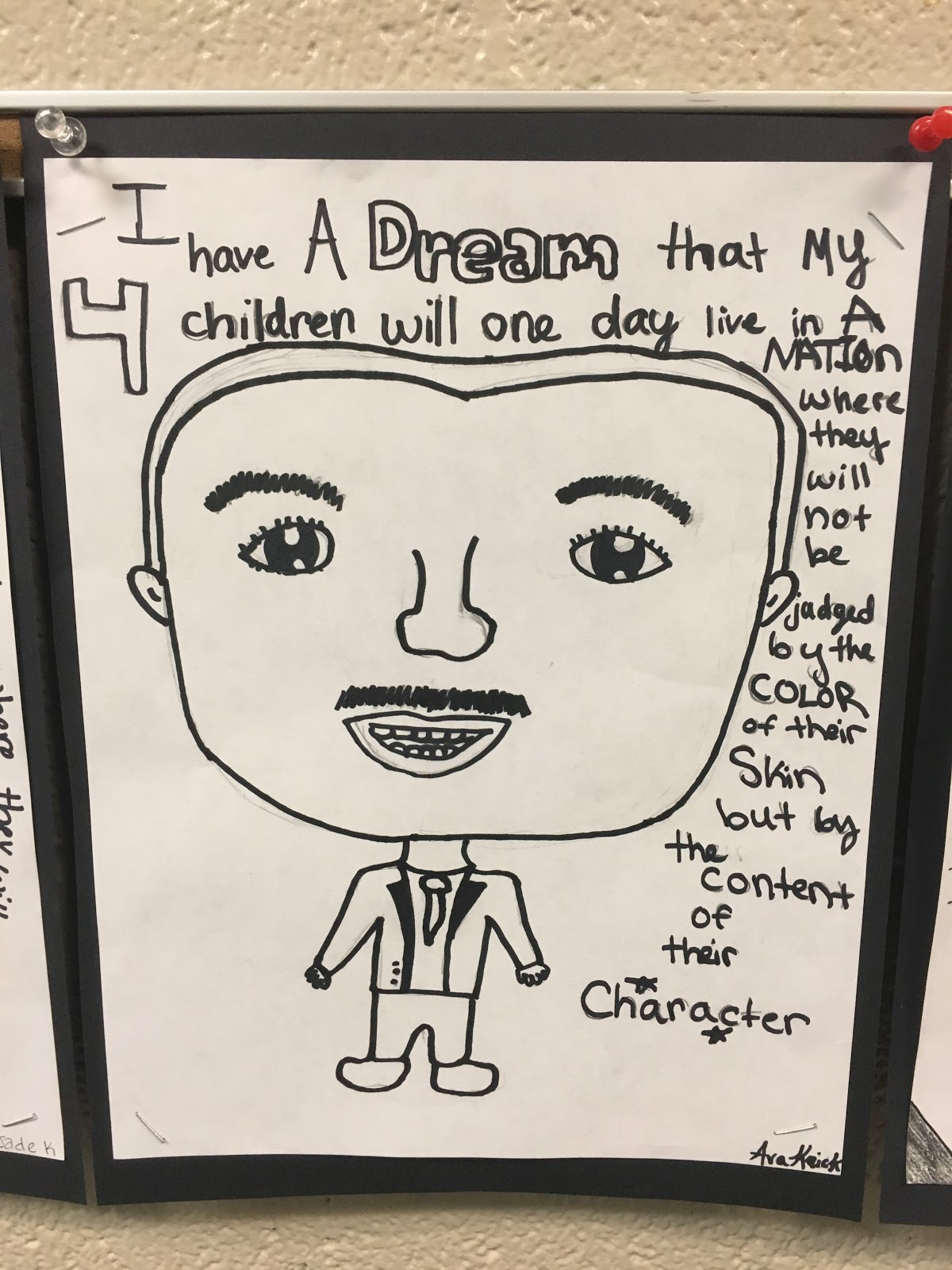
Next, we CLOSE read and annotated one of the greatest pieces of rhetoric in American history - Martin Luther King Jr's "I Have a Dream Speech" We shared found examples of repetition, figurative language, shared our personal thoughts and opinions, and reflected on what it is calling each of us to do, today. 
Finally, using our favorite line from either the prayer or speech, we drew caricatures of MLK surrounded by our favorite quote. These turned out really unique and fun :) I found this cute idea and a step-by-step drawing example over at Curriculum and Crayons and adapted it a little. 


CLOSE Reading and Annotating Poetry

For our poetry unit, I focused on ballads (poems that tell stories). Ballads were an extremely popular style of poetry during the 17th and 18th centuries and deal with many colonial issues. We studied "The Highwayman", "The Midnight Ride of Paul Revere", "Ballad of the Working Man", "The Black Velvet Band", and others. 
We worked together to analyze tone, rhythm, rhyme, repetition, bias and point of view in poetry, impact of figurative language, and overall theme and author's meaning. 
To complete the unit, students worked independently to annotate a ballad independently. While we have moved on from the "introductory unit" we will continue to analyze different types of poetry throughout the year. 

I have completely fallen in love with CLOSE reading and annotation - I find that by giving the students a rubric type break down of the items to analyze, they are able to practice the skill independently and come to very deep connections and thoughts on literature. This technique is very similar to Article of the Week, an idea founded by Kelly Gallagher. For more information on Article of the Week and example articles, check out THIS post. 

Thursday, July 7, 2016

Native American Writing Activities

Integrating social studies into writing can be a lot of fun - whether it be creative, informational, or argumentative writing, kids never seem to get writer's block with Native American culture! 

Here are some we did: 
After studying the Northwest coastal tribes, students chose spirit animals to represent each person in their family. They then wrote a paragraph about why they chose which animal and what the animal represented, all wrapped up nicely between an introductory and conclusion statement. 
We also created totem poles using THIS template you can purchase from Rockin Resources on TPT. And a LOT of paper towel and toilet paper rolls! Pringles cans work well too, we discovered.  


Using a Scholastic Article, students argued whether the use of Native American mascots in sports was insulting or honoring. 
While studying American Indian legends, we recognized the symbolism of birds. Birds were often used as clan symbols by many native regions. Previously, in reading small groups, we had analyzed "How The Raven Stole the Sun" - free copy here
We also did a close read on Eagles and Owls, identifying compare and contrast signal words. Using this information, we wrote short paragraphs comparing and contrasting the two. 
Great FREE information from the US Army Corps of Engineers to go along with an Eagle study HERE (articles, activities, build an eagle wing, etc.) 

Monday, March 30, 2015

Akwaaba se West Africa!

(Twi Language) 
Welcome to WEST AFRICA! 
Recently, we traveled back to the continent of Africa to experience what life was like in 15th century West Africa. Like many of the Native American Tribes, Africa was a mixture of many different cultures and civilizations, some massive and incredibly powerful (like the Inca and Aztec) and many smaller villages and tribes. 

To discover this, we close read our text looking for the text feature of description. 
After identifying what life was like, we took notes inside our African outline and then participated in some traditional crafts that celebrate West African culture. We also listened to traditional music and played some fun games including Mancala and Queah. 
West African Necklaces 

Do any of you do anything unique to help students understand life in 15th century West Africa? 

Sunday, March 29, 2015

Columbian Exchange


After our unit on Early Explorers, I introduce the Columbian Exchange with a short film addressing the different causes and effects of it. We discuss which thinking map we would utilize for taking notes on Cause and Effect and then I set a purpose for them and have them take notes of causes and effects during the film.                                                                              We also identified KEY words for cause and effect that can help us identify them in texts. Using two different crayons, we underlined the causes and the effects of the Columbian Exchange in a short non-fiction passage.  
LOOK at the text FOCUS going on here! *Teacher Heart Happy*
We then read the text features closely, with the purpose of identifying which products were traded where, either on purpose or accidently. Students worked with a partner to create a T-chart of old and new world products. 
Using our notes, we map these products and their routes on large world maps. 

Working with their partner, each student writes a short paragraph about either the effects the exchange had on the old or new world and add them to their maps. 
Later during the week, we act out my Columbian Exchange simulation which you can check out HERE. 
Related Posts Plugin for WordPress, Blogger...