Showing posts with label Medieval History. Show all posts

Friday, February 26, 2021

Mesoamerican Mosaic Projects


For our project assessment of Mesoamerican civilizations, I have the students utilize contact vocabulary and research to create a world mosaic. 

Our history curriculum has us cover the 3 major Mesoamerican empires - the Maya, the Aztec, and the Inca. If you do more, just add them as a research option for your kids. 

After our whole class study, I tell the kids to now focus on that either interested them or they would like to learn more about - this will be their project civilization. 

Using textbooks, resource and library books, and the internet, their purpose for research is to find content vocabulary words and phrases that are important to understanding their civilization. Students should be taking record of a minimus of 50 words/phrases, either by hand or on a document so they can refer back to it. 

Before, during, or after, the word research, students are also needing to create a hardcopy poster (I often use large construction paper instead of full poster paper, but that is up to you). On this, I require them to draw, print digitally, or a hybrid of both, 5 images that connect with the civilization (I require one of these to be in the center and the other 4 to be along the edges). 

While I allow for the words and the pictures to be printed, I do not accept an entire digital poster for this as I would like students to utilize paper/scissor organization on a hardcopy. We do so much with digital resources that I find some kids have lost the skill of being able to make a hands-on project.

If you are interested in this project, it is available HERE on my TPT! 

I am always blown away by my student's projects and they always share that they really enjoyed learning more about their civilization this way. 


Thursday, February 25, 2021

Animism and Nature Art Projects

Animism is the worshipping of animals/nature and their "spirits". Many Ancient cultures around the world including native Americans, indigenous African peoples, and European tribes such as the Celts, Guals, and Germanic

tribes.


While studying the importance of nature to many these groups, we used our own backyard nature to create "nature drawings".


First we spend time outside picking off of items we had around our school and collecting them in boxes- we did this in the late fall, so it was okay that many of the items were picked as they were going to be dying very soon - you would want to control the picking if this wasn't the case for your students!


Next we sorted our treasures and worked with them to create a design.

Finally, we used wet glue to paste them down onto strong card stock paper.


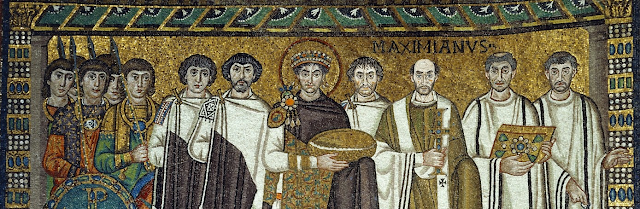
Byzantine Empire: Coptic Art


The Byzantine Empire is often recognized through Coptic Art.

Coptic Art is the Christian art of the Byzantine Empire's churches. Blending Greco-Roman-Egyptian styles, coptic art is best known for its wall-paintings, textiles, illuminated manuscripts, and metalwork. Most surviving pieces can be found in monasteries and Catholic Churches.

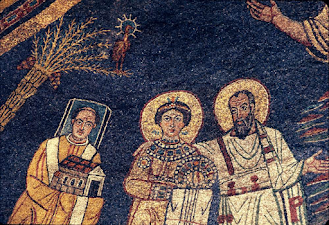
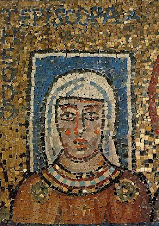
Byzantine Emperors  Empresses, church leaders, and nobles often had their portraits done in the Coptic Art style. In the beautiful portraits, once can see the diversity in the Byzantine empire's clothing and influences from around the globe, due to their large trade networking. 


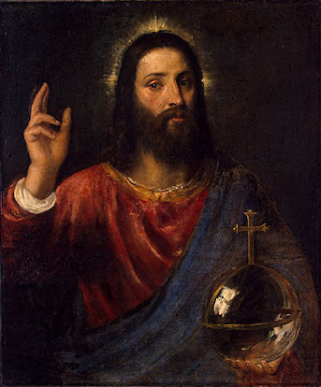
Another distinction of Coptic Art is the usage of halos. While originally used to show the divinity of Christ, during the Byzantine Empire, the halo came to signify importance of a person both religiously and politically. Emperors and Empresses, along with religious leaders, nobles, and other important Bible characters often received a halo around their head. 

After researching styles and portraits of Byzantine Coptic art, students designed their own unique portrait, utilizing the different art and fashion styles of Byzantine Empire. 

After drawing and coloring their pieces, we added silver/gold/white puffy paint to add dimension as well as highlight the usage of dots in Coptic Art. 


FUN FACT: Often, when a halo was used, it was to indicate that the person being drawn was deceased, if they person was still alive, it was common to draw a square halo around a person's head. 

Halos will eventually evolve as as art changes through the Middle Ages and by the Renaissance, most artists, trying to paint with more realism, begin to depict Christ and saints with rays of light and 1-D halo will be dropped altogether.


SHARK TANK - Medieval Chinese Inventions


Have you ever done a "Shark Tank" style presentation with your students? Man, I just LOVE this as a project assessment in history since it blends so many other skills including presentation skills, developing a sales pitch, persuasive techniques, public speaking, and of course, research. 

I have my students follow the directions according to THIS phenomenal TPT product by Instructomania which provides everything you need to set your students up for success as they present their "Medieval Invention" to the "Sharks". 

We also watch a few shark tank presentations from the actual show to help students recognize what they are supposed to be doing. I require them to act as if they are back in Medieval China (with that time period's geography, knowledge, experience, etc.) but I allow them to use, of course, modern technology to demonstrate their items. 

I did supplement that activity with a few handouts that I felt provided my community volunteer "sharks" with a little more information as well as gave my students a bit more accountability. 

If you are interested in my added documents, they are available below for FREE! 

Group Preparation Sheet (given a day or two before) 
 (not be turned in, just for the judges use) 
(teacher evaluation of each student individually - the "partner satisfaction" grade comes from the next document) 
(I believe that students should always be held accountable for their action and participation in group work) 

This year we presented our "Sales Pitches" to our community members in the gym, due to COVID spacing necessity, however, after having done it, I think I will continue to do this as it added an element of seriousness as well as professionalism and excitement to the students presentations. 


African Mud Cloth!

One of my own personal favorite interior decoration designs, and an extremely popular one currently, is African Mud Cloth. Intricately created by craftsmen in Africa, these pieces of cloth are beautiful and of incredible quality. 

Before working on our own creation, we watched a video of this beautiful girl sharing about the heritage of Mud Cloth in Africa. 


I also share a power point presentation about the cultural heritage, the process of creation, and symbols that are often used. 


After that, we are ready to try it out ourselves - now, it wasn't quite as accurate as the real stuff, but I think they turned out pretty beautiful! 

You'll Need: 
Shallow boxes
Square or rectangular pieces of muslin or cotton cloth
Paint brushes (preferably the sturdy bristled ones) 

*I recommend doing this outside if possible! 

Mud Paint Ingredients: 
Water
Soil (I used rich, dark top soil) 
Black ink (I used block print ink/paint) 

1. Mix together 
2. Paint your design! 
3. Leave the wet mixture on the cloth, the pieces of extra dirt brush/fall off easily once the mud has dried. 
Finished Products! 

West African Biography Griot Mask Project


As a our project assessment for our study on Medieval West African Empires, I have students conduct research on a Medieval West African leader. 

Griot masks were an important part of West African culture. They were used to tell stories of ancestors and to keep their legacies alive. Playing off this cultural tradition, I have students create a unique griot mask of their West African leader using elements from their biography to create unique designs, symbols, or colors on the mask. 

Some Great West African Leaders: Mansa Musa, Queen Amina, Queen Nzinga, Shaka Zulu, Shamba Bolongongo, King Sonni Ali, King Mwana Ngana Ndumba Tembo, Queen Asantewa, King Oba Oduduwa, King Bahanzin Hossu Bowelle – aka. The Shark King, and more! 

NOTE: I am aware that some of these leaders were after the "Medieval" period, but the goal was exposure to West African leadership, so I allowed any leader up through colonization. 

I feel my students did a fantastic job of blending their biographical knowledge along with the creation of unique Griot Mask! 

If you are interested in this WEST AFRICAN BIOGRAPHY GRIOT ACTIVITY, it is available on my TPT. 


Related Posts Plugin for WordPress, Blogger...