After researching about life during the Revolution for Patriots and Loyalists, students discovered which "side" they would have been on by completing a agree/disagree activity - many were surprised by the results! Check out my TPT for this fun decision making activity! These turned out beautifully! Students really got into character for this and the letters are an incredible display of historical fiction.
After choosing which side they wanted to write from, we used our historical research, added creative fiction to it, and wrote a letter sharing our reasons for joining the war, how life has changed for us, and what we are doing to help the war effort. For our final draft, students created authentic looking "tea paper".
Since art falls under the "humanities" umbrella, I get to incorporate it into English and History - SO FUN! We learned about George Surat and took a look at Pointillism. His piece "Sunday Afternoon on the Island of La Grande," was one of the first paintings I can remember recognizing and appreciating at the Chicago Art Institute, when I was younger. A form of impressionism, pointillism utilizes LOTS of dots to help for a picture. After showing the students the video above, we draw out an outline of our object, then, using paint brushes, blotted our dots, using different colors and shading to bring the illustration to life.
Among the events that frustrated the colonists was an event, known in America today, as the Boston Massacre. As students debated this week, however, that may not be a very accurate name for the events that took place, March 5th, 1770.
In the end, students discovered for themselves whether this indeed should be considered a "massacre" and discussed why Paul Revere (a Son of Liberty himself) may have called it a "massacre" (Propaganda much?).
Working as colonial investigative detectives, students had the chance to experience 4 live interviews and one (primary source) interview, along with illustrations of the event, and access to the actual crime scene. This TOTALLY INCREDIBLE lesson plan activity and idea comes from the fabulous To Engage Them All where you can get ALL of these amazing resources, well, except for the interview videos - you have to be brave and make those yourself :)
The following day, we discovered the "historical answer" to our Crime - John Adams (a Patriot) will actually take up the British soldiers cause and defend them in colonial court. 10 of them will be acquitted, while the first two to fire (considered insubordination because the Captain never called "fire") will be branded with "M" for murderer. Belowis the powerful defense John Adams gives and who's ideas of facts and evidence will help create a foundation for our justice system today.
The happy colonists are enjoying their new found freedom, creating their own representative governments, harvesting cash crops, and thoroughly enjoying the NEW WORLD - however, there is trouble in paradise! We studied about the battle over the Ohio River valley between the French and the English. While fighting for control over this vital trade and farm land, we learned the cost the Natives endured. Feeling that the French respected them more, had more positive trade relations, and overall had much less settlers in the New World, most native tribes joined them in running the English out (Hence the "French and Indian War"). Unfortunately, for both the French and the Native population, England succeeds in winning and ends the European fight for land in North America.
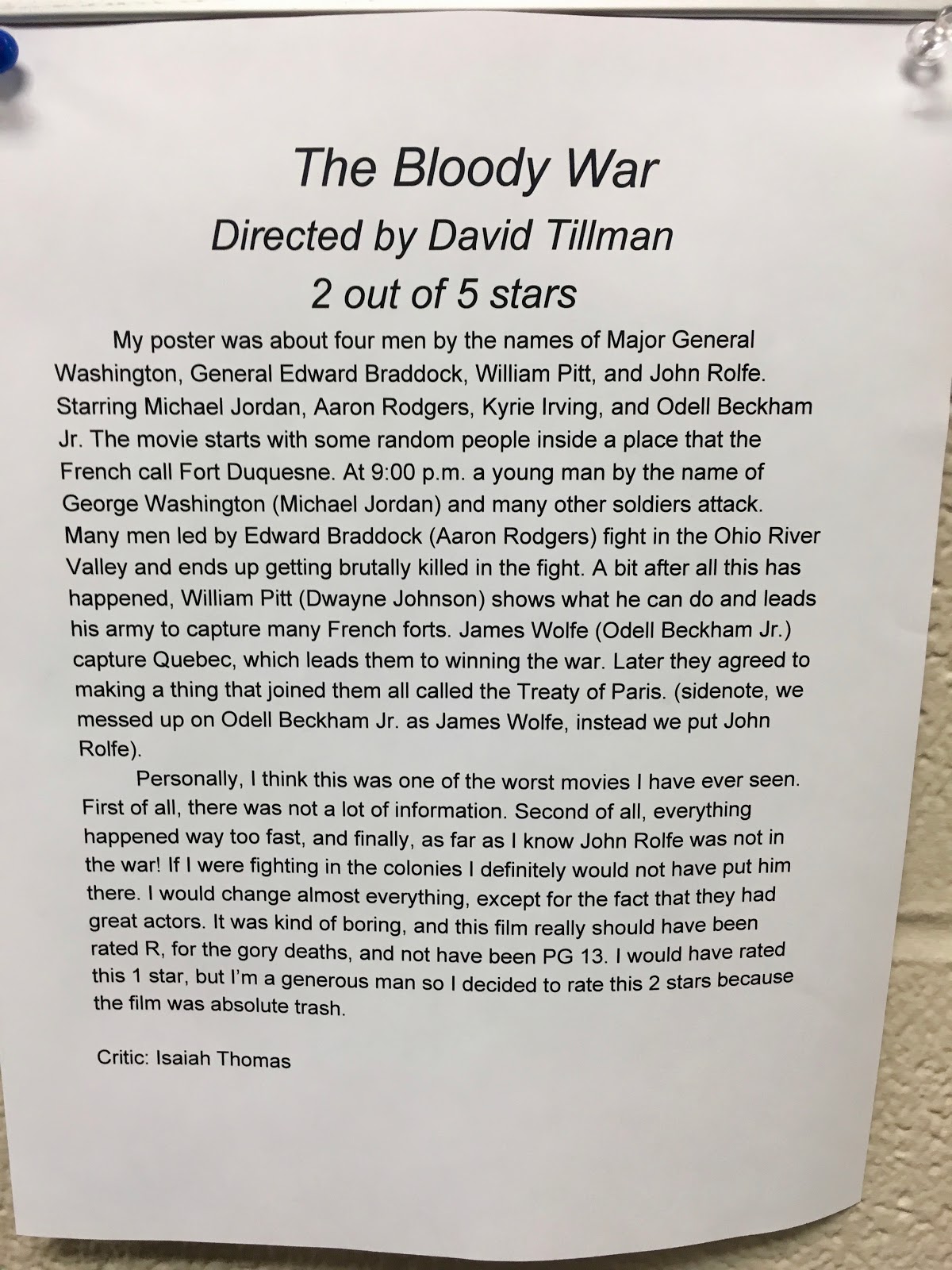
To demonstrate their knowledge on this topic, students worked either with a partner, or independently, as "movie directors" to create a movie poster about their "War Film". Films needed to tell the story of the French and Indian War, including some of the key events and characters, but could be fudged a little in the area of creativity. Some students chose to make an iMovie trailer instead! Independently, students also were give the task of summarizing their movie (the war) and giving a critique about their movie. As usual, I was impressed with both the kids creativity and knowledge about the content.
While studying the colonies, students were given a colonial character card and asked to get up and move around the room to find the person they are looking for in the "village". Once partnered up, students analyzed colonial clothing online. **Other ways I have used my character cards HERE Interactive Colonial Clothing Website We discovered that they were LOTS of clothing and that their materials and amount of clothing often reflected a person's social status.
Using their colonial character bio information, students practiced the skill of using quotation marks and wrote mixed dialogue (blending dialogue with narration) about two colonial characters interacting. Below are some examples of their colonial dialogue - I also shared with them some "colonial phrases and greetings" that they had the option of trying out in their conversations. I think these turned out really cute!
So, as many of you know, I moved this year from being a 5th grade English and History (humanities) teacher to be being an 8th grade English and History teacher. I was excited because I LOVE teaching American history, and both 5th and 8th study it! As I was forming lesson plans early on, I was very much afraid that the activities I did with 5th graders would be too juvenile for 8th grade.
Boy, was I WRONG.
If my 5th graders loved it, my 8th graders love it. annnnnnd the exciting part is the level of depth my middl schoolers are then able to take the information. Here are a couple cross over activities that I have previously posted about.
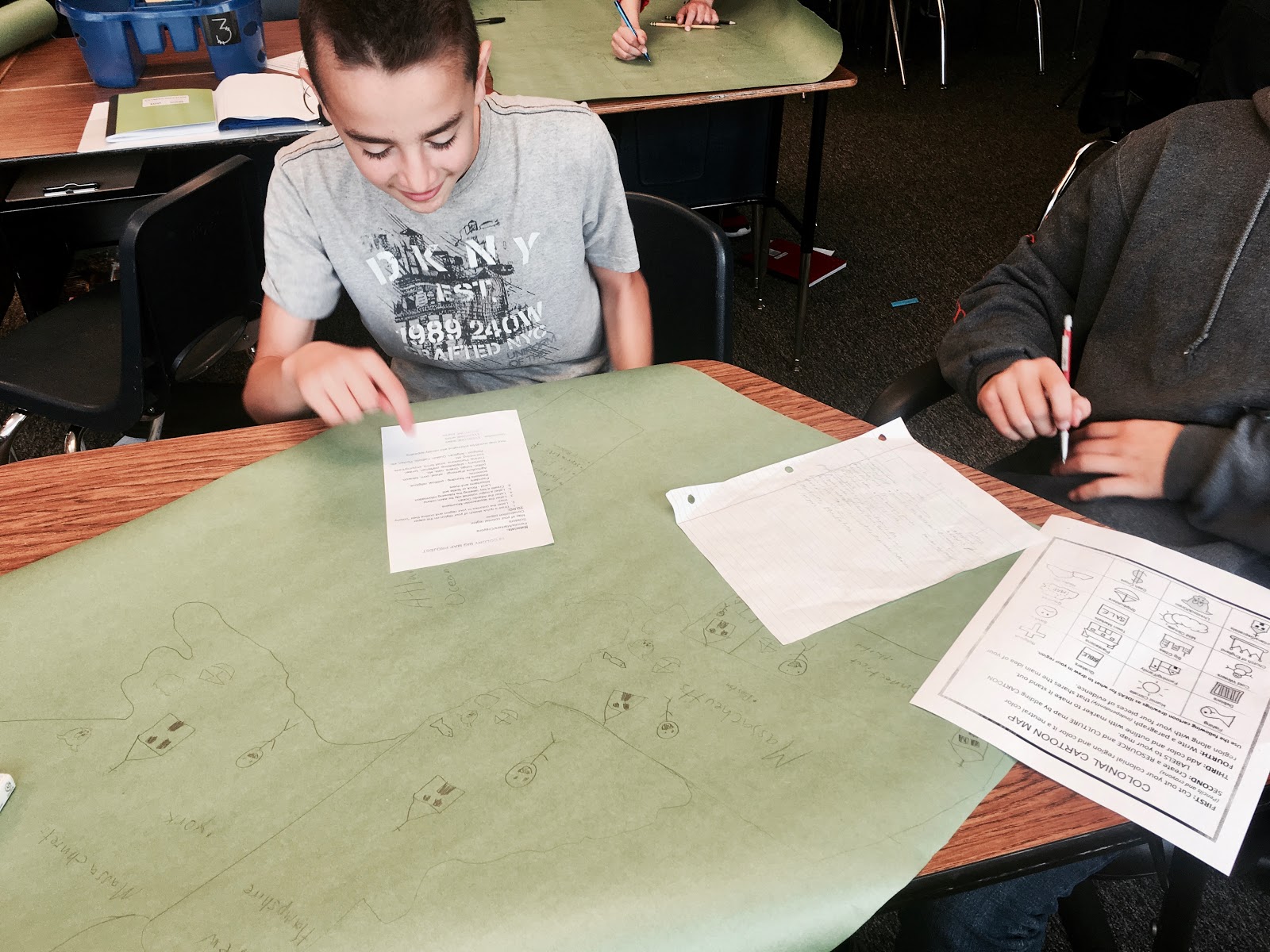
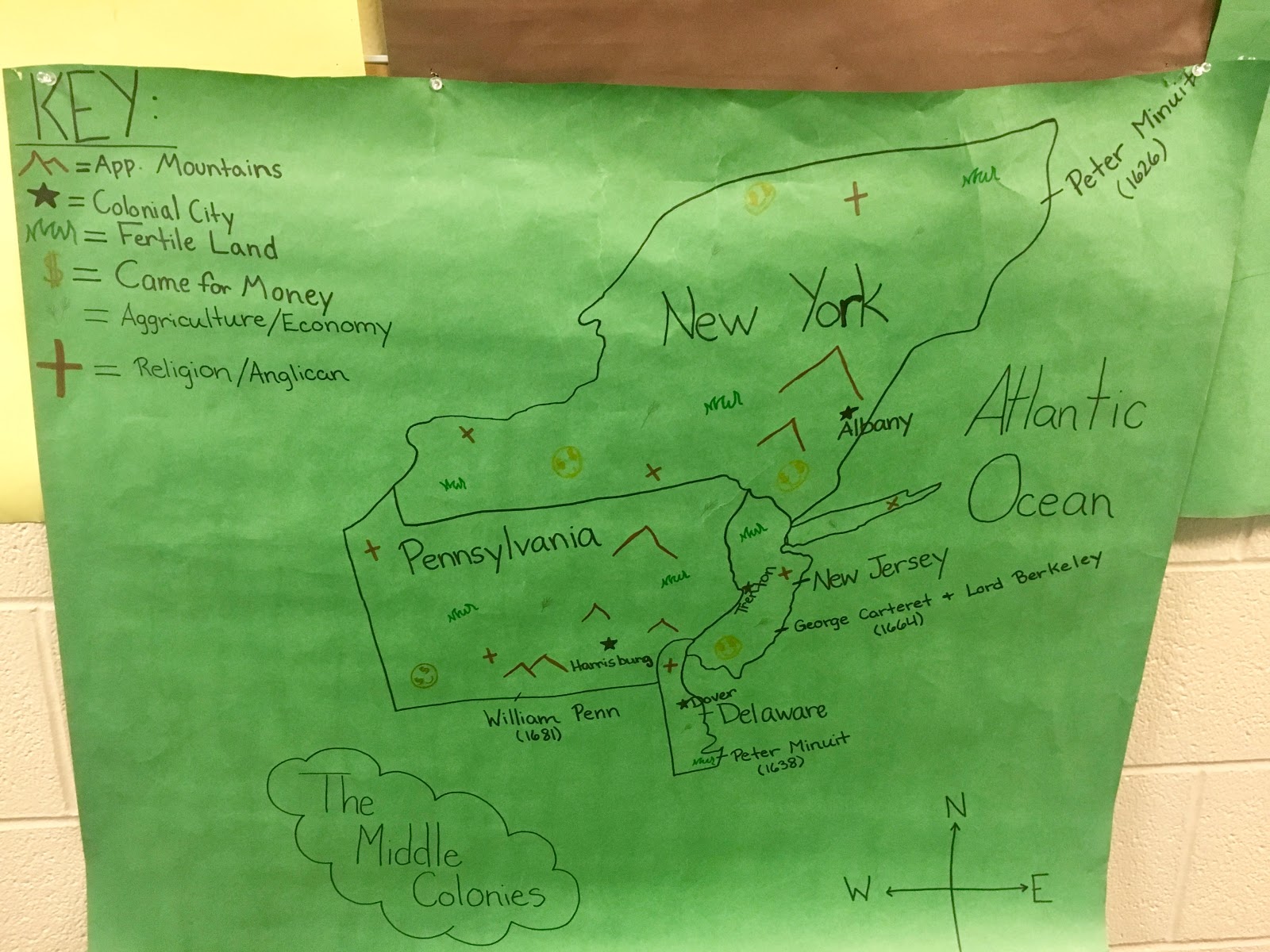
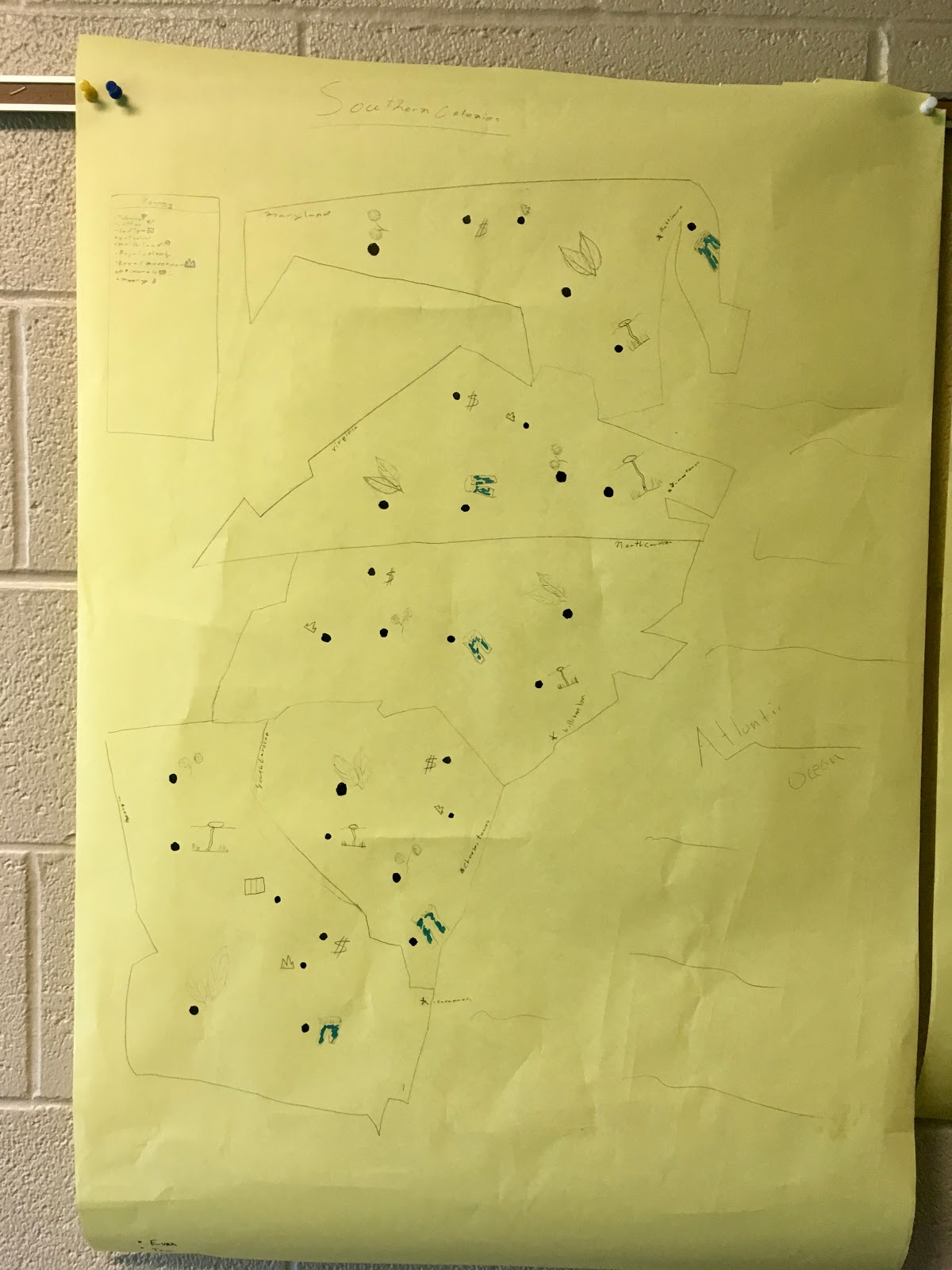
Colony Resource Maps: We studied the different regions, identifying their different governments, environments, religions, economies, and reasons for founding.
After completing our "moving textbook" notes, where students filled in their tree notes while reading printouts around the classroom, students worked with a partner to create a resource map and key for a specific region.
Playing with Gummy Bears: Food is always a crowd pleaser no matter the age. After studying the Revolution, during our Government unit, I busted out my gummy bear types of government lesson. A classic.